Tuesday, March 19, 2024

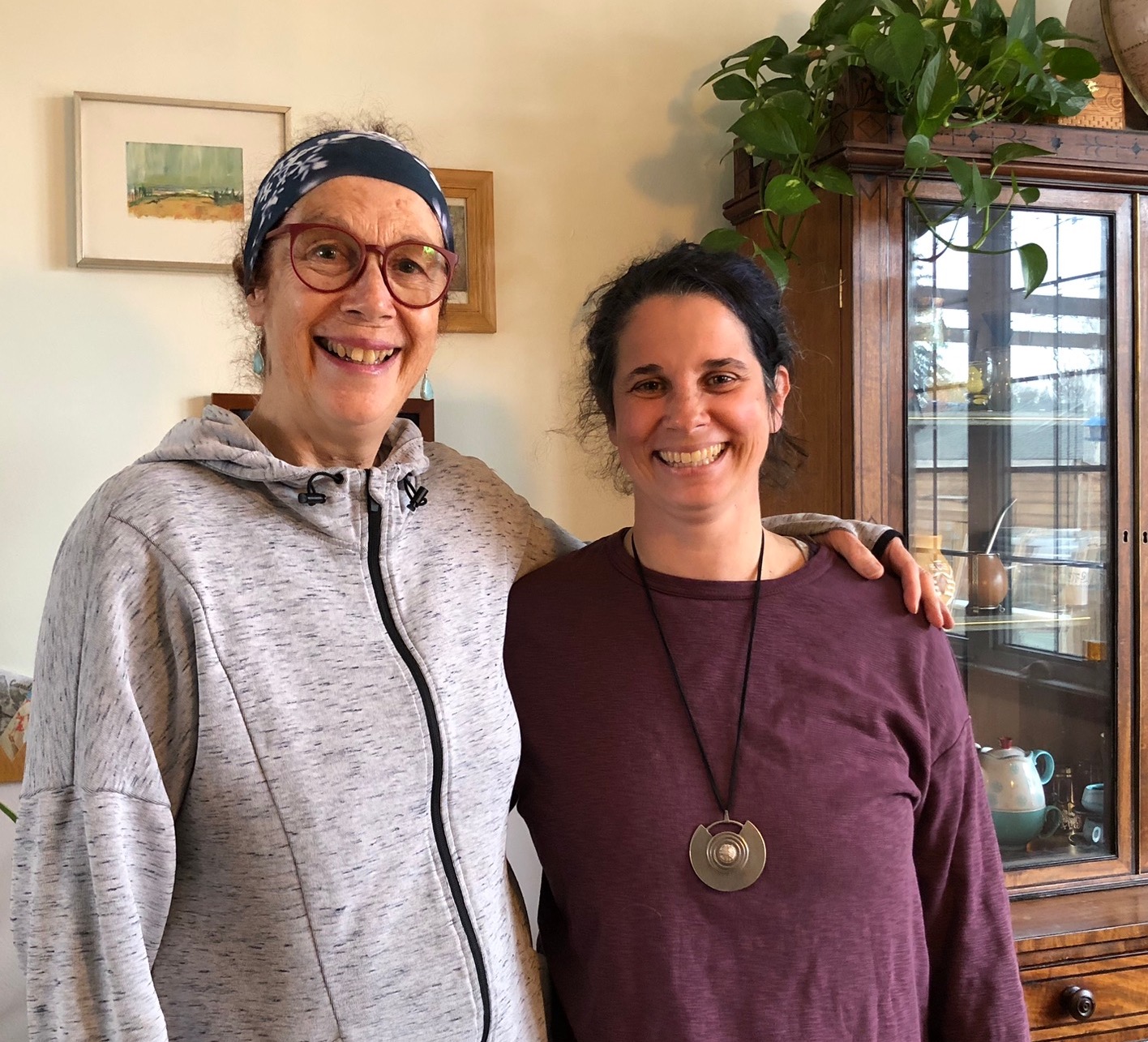
Monochrome Granny and Colorful Granny


There's an obscure Norwegian movie called "The Bothersome Man". The film is set mostly in black and white, and it's dreary and boring, for most of the time. At a certain point, the Bothersome Man finds himself digging a tunnel up into a brightly lit, warm, colourful house, where there are flowers, children laughing, and cakes. He grabs some cake and then gets pulled back down into the monochrome reality of his life and sent to an arctic-looking wilderness.

I've been dreaming about moving back to the country. I imagine a house filled up with movement: a dog, a cat, people around, a wood stove that I can cook on, things lying around the way they tend to do in country houses. I'm staring into what I hope is a creative space and I realized I'm looking at some seashells on my window sill. I picked them up somewhere, years ago, probably four different places. The spiral shapes are compelling, inviting me to go down that windy memory lane to remember where I picked them up off the warm sand. But more than that, they're also telling me they don't belong here. Here is inside, on a window sill, in a city a thousand miles from the sea. They bring me peace, though. 

A little further down the windowsill are some small glass jars I've filled with herbs: coltsfoot and alcohol; coltsfoot and honey; spring herbs and alcohol. I was going to make spring bitters. I was going to make cough syrup. I'm channelling my little house at the edge of the forest: my cat, my wild herbs, my chickens and their brown eggs with orange yolks. We do own a house in the forest, but we only go there in the summertime so I can't keep chickens or grow a garden. And I don't even want to: my son and my lovely grandchildren are in Los Angeles, so am I going to live a dreamy witch life and never travel? Hide inside my wild herbs and my snail shells? I'd be that crusty old weird granny they hardly ever see: instead I'm the funny bright Granny who reads books and does squats. 

In front of the window sill is a beautiful wooden high chair that my husband crafted 34 years ago. My third son sat in that chair for hours, soaking up the sights and sounds of the medieval tower we lived in. The colours on the tablecloth; the sounds of our voices; the sounds of the people in the village below; the smell of the food we cooked and ate; the sounds of his brothers arguing and playing. Then his younger brother observed farm life from it: food being prepared; wine being poured; older brothers running around; the cat on the chair. Then the youngest brother of all sat in that same chair in a suburban house on a street that had a rural-sounding name. When he was still a toddler we bought an old abandoned shepherd's house that he learned to love, and he learned to love being in the countryside and sleeping in the quiet, and walking in the woods.

Is it the quiet I'm craving? It's partly a psychic quiet, where you're not pushed up together with so many thousands of souls. You look at the sky, or the moon, and you can actually see them. You feel the earth. But I'm not seeking quiet. I'm seeking comfort, and a certain type of joy that I feel when my feet are hitting dirt or rocks instead of cement and asphalt. I'm seeking that colorful room, there where there's a woodstove that I can cook on, and flowers from the garden, and warm cakes, and children laughing, and stars in the sky, and pancakes in the morning, and a cat, and a dog, and ducks, and cups of tea, and a necklace made of wooden beads, and petals, and snails, and I know I'm home.


50k?


50 k?

Why would anyone want to run fifty kilometres? And in the desert, no less. Well, me for one.

But why? I think there are many reasons, but the ones I can easily glean for now are these: Firstly, I am competitive. I like to do things others may not have done, or want to do. I like to prove to myself that I am better than last week’s version of myself. Secondly, I do actually love to run. I love how the world moves into focus and becomes clearer and further away at the same time. I love listening to my feet hit the ground; I love the feel of my breath, and the feeling of sweat dripping from everywhere. I love moving through space. Third, my body has disappointed me over the years. I have scars to prove that I wasn’t as strong as I could have been/ wanted to be/ should have been. So now I like to push that same body to chase limits it has never chased before.

This week, I decided I’m going to train for the Grandmaster Ultras that take place in February in Arizona. I looked at the videos of the trail and it looks reasonably terrifying: mile after mile of desert. Then why? Why wouldn’t I be content with my family, my profession (birth attendant), life in general. Does it have to be taken to extremes?

Yep.

First days of training: I’m hugely confident and excited and hugely doubtful and critical both at the same time. Not to jinx, but I really am just a kind of small 66 year old with delusions of grandeur. Small with more shapeliness than I ever had. I used to be more bony, which is good because who wants a bony Granny? And I know my grandson loves to cuddle.

The important thing for me is to stay on track, on a schedule. Today I did hill repeats, where you run up hard and down slower. This schedule idea is completely at odds with the way I lived my life for almost forty years, where my time was at the behest of babies, children, hens, and birthing women. I was on call 24/7 for about twenty years, and could never stick to a plan. But now I find that this task cries out for a plan and discipline keeping to it.

I’m doing strength training too, which is also new for me. I always kept fit carrying large bags of cement, 18 l jerry cans of water, children, bags of flour, stones (building), and all that. But I find the intensity and regularity of strength training is fun and calming.

Life can be so intensely disappointing. It never really works out the way you imagined it: not the little things all the way to the big ones. I’m watching our planet burn this summer and feeling sad. I read about factory farming in gruesome detail the other day in Jonathan Safran Foer’s book “Eating Animals” and I can’t eat them any more, even though when I’m training really hard I could literally take a bite from my dog’s haunch and chow it down. I organized a camping trip for a small group of women but then realized they were all young mothers bringing their kids. I felt like an outsider, and sad, and embarrassed.

But don’t imagine it’s just me labouring under disappointment: we all are. And don’t imagine that I am not also intensely grateful, thankful, and simply joyful to be on this planet with all of you. And that’s what it is: for me, the urge to run fifty kilometres in the desert on a weekend in February opens the possibility to split disappointment down the middle and replace it with joy, victory, satisfaction, and grace.

Wednesday, March 6, 2024

A Fun Day in the Desert


I woke at 6:15 and got dressed. My gear was kind of organized the night before but I still had to dress, use the bathroom, eat breakfast, fill my flasks and get my act together. I filled my water bladder and attached in into my vest, got my maple syrup and salt flask ready, packed my vest with the things I thought I would need for the day: cheerios, candies, salt tabs, wipes in ziplock, pee cloth, re-suable cup, emergency blanket (I take one everywhere, traveled through Africa with it decades ago.) Sunscreen, lip balm, phone and headphones. Watch. 

I pinned on my bib, gobbled my breakfast, gulped my coffee and my son drove me to the race start. It was pretty low key over there. Everyone is over 50 who's involved in the race. There's a 50k, 50 miler, 100k, 100 miler. The oldest runner is in his 80's. We had a little pep talk, then we head out. 

I am so happy! I've studied the course. I know what I'm going to eat. I am in the desert, my favourite place on the planet. And besides, I labored for so many hours to have my five babies, I can run for 50 kilometers no problem!

The trail goes downhill and then along a sandy patch until we reach two large tunnels that go under the highway. I don't like tunnels at the best of times, but these were the only thing that I dreamed about when I was having anxiety dreams about the race. I got through the tunnel and started my race.

Wait a minute. Why do I feel water dripping down my front? Ok, so a few weeks before the race I was doing one of my long runs and the nozzle of my water bladder froze. I had a note on my list of things to do: dress rehearsal of gear. I was going to put all the gear I was going to use for my race, get it all together and just go for an hour run to final test that everything was working.

I never got to do that dress rehearsal. So in fact, the nozzle from the bladder had not only frozen but also ripped. The damn thing had a hole in it and it was spurting water. I noticed it after the big hill after the tunnel...the front of my running top was wet and water was splashing on my legs. I couldn't have worked up a crazy sweat already.... 

First I put it in my mouth and thought I would have a continual water supply. Note: you can't run with a tube in your mouth. Then I tried blowing air into it to see if that would stop the flow. It didn't. I ran up to a group of friends running together and asked if they could think of any quick fixes. They couldn't. I asked if they wanted to hear a joke: "My water broke! I'm leaking and labor hasn't started yet!". haha. Then for about a mile, I held the tube up to stop the water dripping, then I realized if I bend it, it won't drip. So I took some tape from the course markings, tied it around the bent hose, and stuffed it in my pocket.


All good, except that it meant that I only had my 500 ml of electrolyte mix readily available, and I didn't want to mess around untying tape every time I wanted to drink. Anyway, challenge accepted, and I decided to drink the electrolytes and refill with water.

The next 35 kilometers went by like a dream! I ran, I walked, I thought my thoughts. I spun around at times, just drinking in the beauty. I ate Ritz crackers with Nutella at an aid station. I filled my water flask. I didn't like my maple syrup so much. I finished my cheerios, throwing the last four remaining onto the desert ground with a small prayer of gratitude. I danced. I saw a butterfly. I met a cow. I missed a turn and went down the wrong road for a little bit until I realized there were no footprints. I turned around and saw three other runners wildly waving at me, so I turned back and got on track. I had some pumpkin pie at an aid station. I was filled with happiness. At around the 30 km mark I started eating candies and salt tablets. They were just what I needed! I decided to drink from my useless bladder, so I untied it every 20 minutes or so and took a long drink. 

At Mile 24.6, I reached Overlook aid station, 15 minutes after my planned time. I was happy and tired, and my son was waiting there with my Snickers bar! I gave him the offending water bladder, filled my flask, and headed out. Then the demons hit.

It wasn't really Courtney Dauwalter's famous pain cave. It was more like I suddenly realized, at about 42 kilometers, that I was a fat idiot. I was in the middle of the desert, with mountains in the distance, and blue sky above, and  for about a kilometer I was literally adjusting my clothing and worrying that I looked fat. I stopped. I stared at the sky. I had a drink of water. I continued. Fat or not fat, I regained my spirits and ran, stumbled, and walked the last ten km.

The final ten k were the hardest in terms of terrain. Very rocky and some steep descents. I couldn't really run. I slowed down a lot, partly because of my water troubles from the beginning of the race. But my "fat crisis" was minimal, and I regained my smile. I was terrified going back through the tunnel. I kept thinking if someone comes barreling my way in an ATV, what the hell can I do? But no one did, and I survived. I knew I wasn't going to die, the universe wasn't going to play that cosmic joke on me just yet.

Bottom line? I made it to the start line! And I made it to the finish line!

The finish line was a bit of a let-down, to be honest. I thought there would be more people there, but it was very low key. I got in the car with my loyal son and race support and we drive back to the RV where we were staying. I had a burger. I recovered, slowly. 

I trained. I trained hard, and had some setbacks. Physical stuff (colds, muscle aches and the like). Emotional stuff (challenges with family, feelings of Fatness, Fakeness, and the like). Discipline was ongoing. I needed to get out there, and when I had a run or a workout scheduled, I had to do it. I had to eat a lot, and good food. I needed to reframe my idea about how much protein I need, and how my body should look and act. I had to get 8-9 hours of sleep a night.

There's a lot of bullshit out there about a lot of things. Particularly about women, as far as I can see. Particularly about what we are or can be capable of. In this instance, I had to unlearn some of society's misconceptions about older women. 

Three little BS turds right here:

  • Old people don't need to eat much, especially protein. 
  • Old women shouldn't exercise too much. Lighter weights, not too much running (bad on the joints).
  • We need less sleep.
If you're over 60, please have a look at your diet and make sure you are getting at least one source of protein with each meal. Start lifting weights asap! Your muscles are shrinking every day. And run, jump, ski, or dance whenever you feel like it. Sleep! If you wake up at five am, have a nap later in the day.

This isn't one of those "I did it, you can too" pieces. This is: shit happens, and usually we can overcome whatever hurdles are placed in front of us to get where we want, but sometimes we can't. 

My race was February 17, 2024. I had the idea of running an ultramarathon for a few years, so this was a big deal for me that I'd been preparing for for months. On February 8, nine days before my race and three days before I was due to fly out, I got a phone call. 

I was Mika's mentor, her teacher, her colleague, and her friend. She sought refuge with me when her demons first started attacking her in the summer of 2023. I tried to keep in touch. She loved the pictures I sent her from my travels. Mountains, desert, my grandson, snow-filled paths. Cactuses. Especially desert. Mika loved the desert, and she loved the outdoors. 

I ran my first ultramarathon knowing that my lovely young friend didn't find solace in the end, not here on earth anyway. She might not ever get to enjoy the beauty of the desert, the blue sky, the solitude and purity of the desert. Saying she's in a better place is a hopeful platitude, but it's what I hope. I didn't do my final test run of all my gear because I fell into a pit of grief, guilt, and fogginess. So I had a couple of miles of water spurting in the desert. The water in the desert reminded me of the fertility and joy and redemption, second chances, life itself.


Did I bring her memory with me? Not for the whole race. Sometimes the grief jumped out at me. But mostly I drank in the happiness I was feeling. That's the thing about dying: you go somewhere we can't reach, until we go there too. So we are left over here, earthside, wondering what to do.

I think Charles Bukowski said it better than I ever could. Thank you, desert. Thank you, body. Thank you, family. Thank you, Kristina. Thank you, friends, sun, wind, clouds. 

The Laughing Heart by Charles Bukowski

your life is your life
don’t let it be clubbed into dank submission.
be on the watch.
there are ways out.
there is light somewhere.
it may not be much light but
it beats the darkness.
be on the watch.
the gods will offer you chances.
know them.
take them.
you can’t beat death but
you can beat death in life, sometimes.
and the more often you learn to do it,
the more light there will be.
your life is your life.
know it while you have it.
you are marvelous
the gods wait to delight
in you.


Monday, January 22, 2024

Birthing a Marathon?


mile 22

The way I see it, running a marathon and birthing a baby are very similar. I have attended well over 500 births (but under 1000 for those who are into numbers), and these three answers are the most common ones to the prenatal question I ask: "What is your greatest fear?"
  • Dying
  • Pooping in public
  • Not being able to do it
I am a ravenous running nerd, and I read everything and anything to do with running, and I believe these are the three main fears of the marathon runner too: no one wants to die (hence the plethora of articles about people dying at races; no one wants to have to poop suddenly while running (more articles; EVERYONE worries about not finishing a race, for whatever reason.

When I am accompanying a pregnant woman, I may speak with her about her fears for the coming event. The number one fear is that her or the baby will die. Number two, fittingly, is that she will poop during the pushing phase. And number three, as in a marathon, is that she will have a DNF which actually is impossible in birth but, unfortunately, a definite possibility in every runner's mind.

Birthing and Running are the Same?

No, they're not the same, obviously, you can't compare a baby to a piece of bling!

You can compare some of the feelings, though. The hours, days, weeks and months of preparation. Finding a program or a method that matches your philosophy, or hiring a running coach (or a doula - we used to be called "birth coaches"); learning about nutrition; getting excited, then nervous, then depressed, then excited again; talking to other people who have done it ... of course, if this is your first baby or your first big race, all these feelings and choices will be felt and made in technicolor. If you're more experienced, you will still feel the same range of emotions, and you'll be "in the club".

That's where the similarities end, unfortunately.

Running the Drugs?

Runners, imagine this: You're at mile ten, almost half way through your marathon. You're keeping a good pace, maybe you started a little too fast, because this is your first. Your training went well, and you're feeling good. Mile eleven, you have to pee. You take a quick pee stop. At the next station you have a sip of Gatorade and you start to feel a little queasy, the way you ALWAYS DO when you have some carbs around miles ten to fifteen. You know this about yourself. It's a thing.

Suddenly, a car drives up and a bunch of people jump out, looking at their watches. "Your pace has slowed down too much! You're not gonna make your BQ! You might die!". In your head you know they're wrong, and you try to shut them out and run faster, anyway. But their worried expressions start to seep through your endorphin rush. "Oh, shit, does my heart feel weird?"

You let them know you're feeling a little tired, and you had that queasy feeling. All of a sudden, the car speeds up and they make you an offer: "Take some drugs, get in the back of the car, we'll drive you to the finish line, you'll get the bling anyway, all good, no shame, no worries." You protest - you're okay! But a voice in the back of your head says that actually, you're not okay. You need the drugs and you need the car ride. By this time, you're at mile 20 and you hit the wall. Take the drugs, get in the car.

Real Emergencies

Of course real emergencies exist, both during marathons and during birth. In those cases, there's no question that you need the damn car, preferably an ambulance, and you need drugs, and speedy medical intervention, and everything you could possibly grab for a life-saving conclusion to the RARE instance when you are actually in danger of losing your life (or if you're birthing, your baby's life).

Your Choice?

I'm not one of those airy-fairy militants who advocates a natural, candlelit birth for every woman. I've seen babies die, and I've seen women close to dying (Thank God for modern medicine!!). But I  do advocate CHOICE. I was just speaking to a fellow runner this morning. She's been running for twenty years and she's never gone further than 15k. She never races. She runs slow. Me, I've been running seriously for just over five years and I love to race. I push myself ... not too much ... but just enough.

I was at a race about a month ago - it was kind of tough: it was pretty cold and at one point the course turned into a muddy, icy puddle for about a kilometer, and it was a loop, so we had to do the puddle twice, once about the middle of the 21 k and once closer to the end. As I was coming up to the first mud puddle, I saw a runner with a weird gait... I got closer and I saw one of the yellow-jacketed medical people going over to him with a concerned air. The runner told him to go away. As I got closer, I heard him groaning with every step. He sounded like a woman in the deepest labor, feeling that baby's head right down low. A second medical person ran up to him: "Non, non, ça va, merci." ("No, no, it's okay, thank you!") I ran past him and didn't look back.

Here's the thing: I knew that if he was in that much pain already, there were two possibilities: either he would not finish the race, and spend months if not years fixing the damage he had wrought on his body; or he would finish the race and ditto. But, for whatever reason, he MADE THAT CHOICE and it was his to make. Obviously, if he was in cardiac arrest, or lying on the ground unable to move, the paramedics would be in there in a microsecond, doing what they need to do. But he was birthing a marathon HIS WAY.

Birth

I've witnessed a tiny number of births that ended up to be medical emergencies, where mother or baby could have died. But most of them are normal, scary, joyful, life-changing, painful, pleasurable, primal events. Unfortunately, the people who work in the maternity care field are usually unwilling to adopt the "marathon runner" model, and instead use the "air crash" model. In the latter, birth is simply an accident waiting to happen. In the "marathon runner" model, the birthing woman could be treated like a marathon runner: during the nine months before the event make sure you are healthy (I got a cardiac ultrasound done last year before starting my marathon training because of a risk of familial cardiomyopathy); create your team; and start preparing.

Let's skip ahead to the "event": the runner has been trainings for months. She followed a training program, or had a coach guide her through the realities of training to run 26 miles. The birthing woman has been preparing for this day for months as well, and she has been working with her team to make the upcoming event as pleasurable as possible.  Both the runner and the birthing woman have possibly been reading everything they can about their upcoming event, and both may have suffered setbacks along the way.

Running

And, now, what happens when you're running a marathon? You join a big, happy crowd of people, and you start. As you run the miles, you are handed water, energy drinks, yummy gels, bananas. All along the route there are smiling people, holding funny signs, cheering you on, giving you high fives ... letting you know you're doing great!

No one looks at you with a worried look, even if you're the oldest person in the race and the slowest (happened to me on my 60th birthday), they just keep on smiling and cheering, unless, like I said, you're on the ground.

Then why, oh why, did my lovely, young, strong, healthy, well-fed, happy labouring clients get the hairy eyeball from the staff when all they were doing was, basically, the marathon of the day. No smiles, no happy people handing you cute cups of water, no cute cups of energy drinks, no gels, no bananas, no funny signs, no high fives.

The epidural rate for first time mothers in Montreal hospitals is over 90% (don't look at the published statistics, they include second-timers who know better, and pull that statistic down to around 60%). Why? Because we focus on the fear aspect (YOU COULD DIE!!), instead of the fun aspect (YOU GO GIRL!!).

Fun Stuff

Yes, the truth is that running a marathon is just plain more fun, and more pleasurable, and better appreciated, than bringing another human into the world. Weird.

So, I guess that's why I don't attend births in the hospital too much anymore. It just kind of tickles me when I imagine birthing mamas being treated like runners - and how different it is from the reality:

"hey, I know you're planning on running the Barkely, but it looks really dangerous. I think you should run it attached to an IV pole."

Or, "hey, I know you're 60 and you're planning on competing in the World Marathon Challenge. This is super dangerous, why don't you just get really stoned and we will drive you around - you deserve it!"

Or, "you know you could die doing that? Running a marathon/birth/solo travel/sailing/(fill in the blank) is just too dangerous."

Yes, I know I'm gonna die one day, and I'll let you in on a secret - so are you. And so is everybody. But I really wanna have fun while I'm doing this crazy little thing called life. Spread the Love!

Sunday, January 21, 2024

Run for Free?

I've heard it, you probably have too: "Running is free". Yes, if you run naked and barefoot.

But most of us need clothes and footwear, at least. What do you have to buy? What do you actually need? What can you get for free or for cheap, and what should you spend your hard-earned cash on?
Here are some smart shopping tips for runners, coming at you from the frigid north, so these are winter tips … summer tips coming later! Much later! Here is a good info graphic about what to wear in different winter temperatures:


Shoes are the most important things you will have to buy. Of course, they are one of the most controversial. The running shoe industry is a billion dollar industry that has a healthy growth every year. This is not just because more people are running (which they are, especially women), but because our ideas of formal wear and fashion have changed so it is now perfectly acceptable to wear leggings and trainers to work.
In the running world, we started wearing specialized shoes about fifty years ago, when a crazy coach made a pair of shoes using a waffle iron to meld the soles into a half-decent shape. That coach went on to found Nike, which is now a gazillion dollar-a-year company. Now there are tens of thousands of models to choose from, and the big controversy revolves around minimalist or barefoot shoes, and those with more support.
In 2004, Vibram came out with the VibramFiveFingers. The theory was that wearing these shoes would reduce injuries and increase performance. The shoes feel like you’re running barefoot, and they keep your toes apart. I wore them for a few years and I loved them!


Then I went to a slightly more closed shoe, but still minimal. The research actually shows that it’s probably better to wear shoes (see this Runner’s World article), but in 2009, a book came out that appealed to those runners who wanted to get “back to our roots”.
Born to Run really appealed to me too. I loved it!
The reality is that you have to find a shoe that suits your foot, your body and your running style. Go to a good running store or an outdoors store and try on a bunch of shoes, or if you have a store in your area with a treadmill and an expert, get them to check your gait and make suggestions.
You don’t have to pick the most expensive model! But you do have to buy new shoes and spend time on choosing the best ones for your feet and for your body and soul. I have a pair of Fivefingers, that I love. I have two pairs of Merrell barefoot. One has a hole in it, so I just wear it to work. One pair I bought to replace them but they’re not the same model, so not as comfortable. I run in Sayonara Wave but it’s winter now and my feet are getting super cold. Maybe time for a pair of winter running shoes? 


If you’re running on icy or icy snow, you may want to invest in some traction. I had a look at the reviews and these seem to be the best: KahtoolaThese are also a little pricy, but worth it if it will keep you from falling and breaking a bone! You can just strap these on to your regular shoes, so you  your feet won’t have to adjust too much every season change.

Traction Update: All you have to do is pick an older pair of your shoes, a pair of favourites that are still comfortable. Then you're going to go and buy some sheet metal screws with hex heads (from 1/2 to 3/8 inch are optimum). Here is the screw shoe recipe:


I've been wearing these for a few years now and they're perfect!

Socks
must be worn with shoes or your feet will hate you, unless you’re wearing Vibram Fivefingers. You have to spend a little money on decent running socks: merino wool socks are the best, but two pairs of socks are fine and you don’t have to get $50 socks with inlaid silver. I have two pairs of merino wool socks, because I run in cold weather, and a couple of pairs of cotton socks and I’m good and my feet love me, more or less. Injinji are five fingered socks that people either love or hate: I love them! I have a winter pair with five fingered base layer and a woollen over layer. The best!!

Lower Body
means everything below your waist, down to your socks.


You want to keep your muscles covered and warm, but not too warm. In warmer weather, I love to run in a running skirt, so I just have one garment to pull off and on during that frantic pee break at a race. It has soft briefs/shorts underneath and the skirt over top. In cooler weather I have running capris, not skin tight, and in the cold I wear leggings AND a pair of running pants. Or you can wear winter running leggings with a warm pair of shorts over top. You can get all this gear used! I go to Value Village, or you can scour the online garage sales or go to real ones. Okay, maybe you don’t want used leggings, but everything else is WAY cheaper used, and its never used that much, because whoever bought it got tired of running and gave it away. I’ve bought hundreds of dollars worth of running gear for 10% of the price. Also, check out online trading sites in your area. They are a great way to get rid of stuff you no longer need, and pick up stuff you do need, all without exchanging money.

Upper Body is basically, torso above the waist. What to wear? Short-sleeved, long-sleeved, fleecy, my gram’s old cotton T-shirt? What you want is a reasonable quality short-sleeved running shirt over your undershirt or bra. Wicking is the key word here. It means that the fabric doesn’t trap water, so when you sweat it will allow the moisture to move away from your body and into the air space between the under layer of clothing and the next one. Your two options to achieve this are either synthetics, which simply allow the moisture to pass through, or merino wool, which will absorb the excess water and keep you warm and dry. It is nice if this layer can be snug, as it will help with removing the sweat from your bod, and make you feel cozy. 
Over that, you will want a mid-layer that can be a fleecy or a synthetic long-sleeved shirt or thin jacket. If its really cold, you can put a fleecy vest over those two layers. These layers can be picked up gently used at your local thrift store, or at online or real garage sales. Also, check for clearance sales at outdoor stores. 
Outerwear You won’t usually need to wear a jacket over your running wear unless 1. it is raining or 2. it is very cold (below -10 Celsius or 10 Fahrenheit). If it’s raining, obviously you need a waterproof jacket. A light cool rain is lovely to run in, and a waterproof jacket makes you sweat so you have to decide whether to bother with a rain jacket, depending on how cold it is, how rainy it is and where you are running. I got my running rain jacket from an online trading site. I traded a pair of heeled shoes that didn’t agree with my Plantar’s fasciitis, and got a great bright red jacket!
If it’s super cold out, you don’t want a waterproof jacket; you will need something breathable so your sweat doesn’t get trapped inside, which will cool you down. If you are running through the winter in a very cold climate, this may be another expensive item for your shopping list.

Underwear Yes, you have to buy underwear.


I may be thrifty but I draw the line at wearing someone else’s undies. Top underwear for men is insignificant. I imagine you guys might want to wear a thermal/wicking undershirt or T-shirt under your base layer. If you have chafing issues, make sure you get your undershirt in a fabric that will be kind to your nipples. Women, you already know the importance of a good running bra. Go and try on a bunch of different bras, read up on themdon’t settle for anything that isn’t super comfortable and gives you the support you need. I’m lucky, being less endowed in the bosom area, so I usually wear a tight-fitting tank top under my base layer and I’m happy with it. In the summer, though, I like more support just so I don’t feel like people are staring at my small breasts bobbing around.
A big fuss is made of the importance of insulated underwear for men during the colder months. Apparently there is some danger of freezing your junk off. So make sure you get one of the apparently hundreds, if not thousands, of varieties of insulated boxers if you plan on running outside in cold weather.
However, us women also freeze our butts off in the cold, because the glutes don’t have that much insulating fat. I’ve gone on runs in very cold weather and been toasty warm everywhere else, but felt like I had actual frostbite on my butt. The danger is, you can also put yourself at risk for a bladder infection if you’re so inclined. Not to mention those cold glutes will affect your running form and may leave you with sore hips.
What to do? I find even with leggings I have this problem, and many women I talk to agree. So we’re looking at finding, buying or making women’s insulated boxers. There are a few (very few!) brands of merino women’s boxer briefs: ValhallaNorrona, Helly Hansens. They start at around $50. If you don’t have that much, or don’t want to spend that much on undies, you could either get your Aunt Gertrude to knit you a pair, or try cutting a pair of woollen tights at the knee and see if they work. Remember to go commando whenever you can. If you’re wearing leggings and pants, or shorts over top, you don’t need panties as well. The less extra padding you have the better, unless you are wearing it for insulation. ps. I got a pair of Helly Hansen Women's Boxer Briefs, and they are kind of bun huggers. I was wanting something that would keep my bum warm, and they stop just short of being thongs.

Accessories

There are three important accessories that you will need if you’re running in cold weather. You need a hat. It should cover your ears. There are so many hats that just cover the top of your head, and they’re fine if you’re just running for the bus, but if you’re outside doing a two-hour run, your ears need to be covered. Again, you don’t need to buy a hat. You will probably pick one up at a fall or winter race, or at a thrift store, or on the bus (kidding!). Or you’ll get one as a gift.A neck warmer is SUPER important for cold weather runs. I have a tube neckwarmer. This is a tube made of thin material, and you can wear it around your neck, or bring it over part of your head, or completely over nose and mouth when its very cold. I bought mine at an outdoor store, and I got another two at different races. 
Gloves! I wear fingerless gloves when it’s not too cold out. A little colder, I wear very thin under-gloves with my fingerless gloves over top. The other day it was minus 14 C, that’s around 9 F. I wore thin gloves with mitts over top. My hands were warm enough but I spent some time during the run with my hands balled up in my mitts. All my gloves and mitts I have gotten as gifts.
Read any running magazine and you will be bombarded by advice about this and that extra thing you could use to make your run faster, more fun, more productive, and you get the picture. I am lucky enough to have gotten running watch as a gift for my 60th birthday (you may not have to wait so long!). Mine is a Tomtom, the basic model (no heart monitor attached), and I was very happy with it.

Watch Update: My Tomtom died and they stopped making watches so I got on the Garmin train. I have an Instinct. Very durable, reasonably easy to use, gives me everything I need (and more, but I find it pretty easy to configure out the useless stuff. No, I do not want to be notified when I receive a text...)

Extras

I also use my phone a lot when I run. I have the Runkeeper app. When I choose to, which is for about 2/3 of all my runs, I can set it to let me know my pace at various intervals. I also love to listen to music when I’m running. I only put in one earphone, so I can hear oncoming traffic or dogs or whatever, but I find music is inspiring, helps me run faster, and keeps me in the zone. I know there are purists out there who never listen to music, and that’s fine too. I love to leave my music at home sometimes and run just listening to what’s around me, especially when I’m trail running. Remember, though, these are extras! You don’t need them!And obviously if I’m running with my buddies I won’t be plugged in But mostly, if I’m in the city, I run on my own and I’m listening to my favorite upbeat songs.


Skin care is very important when you’re running outside. I always wear a high-quality sunscreen. It is expensive, but I need it. You have to find one that suits your skin, and it has to stay on through sweating. You’re going to sweat even in the winter, and I always sweat, my eyes tear up, and my nose runs during the winter. So my face can get wet and chafed from the neck warmer if I am running in very cold weather. Wear a good sunscreen AND a good moisturizer, and lip balm. If you’re winter running and wearing your neck warmer over your mouth and nose, don’t bother with lipstick. I usually like a nice fresh lipstick for a summer run, but you don’t want to get it all over the inside of your neck warmer, and then all over your face, so stick to lip balm.
Foot care is also important, so treat yourself to a pedi every once in a while, but a good old foot soak (try bath oil and a couple of drops of cypress essential oil) in the evening while your relaxing can do wonders!
Races can break the bank! Have a look at your budget, at the beginning of your racing year. This could be in January, or when your school year starts, or any time when you can look ahead at 12 months. Decide what races, if any, you would like to go for in the coming year. Then prioritize. Which race (or distance) is the most important? Can you race somewhere else and turn it into a vacation? Are you attracted to one race over another? Do you like the thought of a big race with tens of thousands of participants, lots of bling, and a big party? These are usually presented by big for-profit companies. Or do you like the idea of running to support a charity. Either way, unless you run purely for your own pleasure, you are likely to spend anywhere from $35 to thousands of dollars (if you’ve decided that a destination marathon is living your dream). Most of us mortals, however, will spend about $70-100 for a big race every year and then about $100 altogether for a few smaller runs. If you have a gimmick to sell or lots of contacts in high places you may be able to get a sponsorship for your race. That would be amazing!
Gym membership fees are not absolutely necessary for a runner, after all, that’s why we’re runners right? Because we love to run outside! A few reasons for a runner to join a gym: if you’re training for a race, strength training and cross training are important elements of your program, although this opinion is also controversial (have a look at this argument in Runner’sWorld)
I am a gym member because there are days when it’s just too cold, too blizzard or too icy for me to run outside. Also, I love going to a yoga class every week, and I like to take in a spinning class or use the weights … you get the picture. I’m lucky – I am a member of an amazing gym, and I’m over sixty, so I pay under $60 (that’s Canadian dollars!) a month. Shop around for a gym that suits you; most of them offer a free week so you can get a sense of what it’s like. If you really don’t want or need to join a gym, that’s great! Put that extra money towards healthy food to fuel your runs!
Food is always useful. If you’re running a lot of miles you will need to eat more, and your food choices need to be right for your body. Don’t go vegan if you are always craving meat. Don’t eat lots of meat if you don’t want to. Every body needs its own sources of protein. You need healthy sources of fat, vitamins, and minerals, and you need to base your diet on healthy carbs. Reduce added sugar to under an ounce a day Look at what you’re eating and drinking – I indulge in a gin and tonic on a Friday evening – a tin of tonic water has 38 grams of sugar! I don’t eat much sugar the rest of the week, but I’m not sure I want to use my quota on a canned drink!
Do you need protein powder?
Because I worked as a midwife for many years, and I was assisting women through the time in a woman’s life when her nutritional needs skyrocket, I do know that most people in the affluent world eat too much protein. That said, athletes, even amateurs like you or me, need protein to repair those muscles we are building every time we work out. So it’s a good idea to have a protein shake within about a half hour after a long run, if you are so inclined. A scoop of most protein powders will give you 25-30 grams of protein. That’s a lot for your body to process, and can be from animal or veggie sources. But it’s helpful, if you can afford it. Those big tubs of protein powder are costly, and if you can’t afford them, then you need to be creative about your grocery shopping and make sure you get a good protein snack after a long run. Basically, any workout where your muscles feel sore means that you have very slightly injured those muscles. Rebuilding them is the process the body is going through to build stronger muscles that will endure more. And you need protein for your building blocks.
So, do we need to spend a lot of money on our running passion?
Here’s a breakdown, per year. For the upper limit I have only gone to a modest limit – of course, if you’re independently wealthy, the sky’s the limit! All figures in Canadian dollars.
Shoes                                                                 $70-200
Socks                                                                   $15-50
Lower Body                                                         $20-40
Upper Body                                                         $20-40
Outerwear                                                          $20-150
Underwear                                                           $10-80
Accessories                                                          $0-25
Extras                                                                  $0-200
Races                                                                   $0-200
Gym membership fees                                     $0-1200
TOTAL                                                           $155-2,185
So, it looks like you can either run naked or spend the very minimum of around $150 a year on your favorite sport. Looking good to me!
While we’re on the subject of money, let’s take a peek at some other places you can put your money, now that you’re buying your running clothing at the thrift store.
These are just a few of the organizations that are using running as a way to open new avenues for women and girls living in dangerous or difficult situations around the globe.
I’d love to hear how you’ve found ways to run for cheap, and please let me know about other interesting charities that are supporting young runners! Stay healthy and keep moving!


Saturday, December 17, 2022

Travel Guide for Lady Runners


Well of course you bring all your running gear: shoes, road or trail, 2 pairs of socks, running shorts or skirt, leggings, rain jacket, buff (maybe 2), hankie, 2 t-shirts, hydration belt or vest, headlamp, sun visor, watch ... and y'all have special little running items you might bring. Of course if you're travelling to colder climes for some icy trail running then you'll need extra pants, gloves, hat and a winter jacket. 

The problem is, what else can you stuff in your carry-on after you've packed all your running essentials?

Just recently, I visited Los Angeles to see my baby grandson, my son and his wife. I got my running stuff safely stowed away in my carry-on. Ok. Then what? Forget bringing presents for everyone. I'm going away for ten days, but it's still ten days of clothing.

What's the best carry-on?

*duffle

*suitcase

*backpack 

All three of these bags can have wheels, which makes them more convenient.

Remember that most airlines allow another bag too, so I don't like the backpack option for my carry-on, since I use the biggest backpack I have for my extra bag. And a duffle can be heavy to carry if you're wandering around an airport. So my conclusion is a small wheelie suitcase is actually the best, or a backpack with wheels if you like carrying heavy bags on your bag. I've tried all three. Last summer I walked through Florence with my carry-on backpack on my back and my small backpack in my hand. It was hot! A few years ago I tied a rope around my too-heavy duffel bag and dragged it through the airport like a dog. Then again, try wheeling a wheelie up a gravel road.

So, it's important to figure out where you'll be spending time moving your bag from one place to the next, and plan accordingly. Then you also have to figure out your maximum volume "personal item". I have a lovely leather purse but that can't be my personal item because its too small. A backpack is best, preferably one with a water bottle pocket. 

Now you have your carryon, your personal bag, and all your stuff. What to take??

Running Gear

  • shoes, road and/or trail
  • 2 pairs of socks
  • running shorts or skirt 
  • leggings
  • rain jacket
  • buff (maybe 2)
  • toque
  • hankie
  • 2 T-shirts
  • arm warmers
  • hydration belt or vest
  • headlamp
  • sun visor
  • watch 
  • protein powder or your favourite gels

Of course if you're travelling to colder climes for some icy trail running then you'll need extra pants, gloves, hat and a winter jacket ... and y'all have special little running items you might bring. 

Other Clothes

  • 3 T-shirts
  • 2 long-sleeved shirt (one fancy)
  • fleece or hoodie
  • 2 pants or skirts (one fancy)
  • 2 dresses (one fancy)
  • 5 underwear
  • 3 socks
  • pyjamas
  • flips flops
  • bathing suit
  • regular shoes or boots
Other Stuff
  • jewelry
  • shower bag: try to avoid liquids by using bar shampoo, conditioner and soap. Don't forget your travel sized toothpaste, deodorant, mouthwash, nail clippers, and your favourite moisturizer. I love to bring facial towelettes and I always like to have a washcloth
  • makeup if you use it
  • chargers, laptop, phone, earphones
  • book
  • journal or notebook, pen
  • small day pack/ waist pack or purse
  • snacks/protein bar
  • water bottle
  • earplugs
  • vitamins or meds
Of course you're not going to forget your passport and all your important stuff right?

Annoying Stuff

Ok, so it's winter here but you're going to somewhere warmer? You do have to wear your winter jacket to the airport, and just pack it into a shopping bag if you don't need it where you're going. It's summer here and you're going somewhere cold? Why on earth would you do that?

Presents! If you're going to visit family or friends, or when you're coming home, you want to bring gifts right? But there's no room in your carry-on. You have to think very carefully about gifts, before you pack, and if you plan on bringing a ton of presents and/or bottles back you may want to budget for a check-in bag on your way back. Don't rely on duty free; I've noticed since the pandemics there are often unexpected closures, even in the bigger airports.

Bottom line: have fun! Make sure you bring anything you'll need for your daily run! Buon Viaggio!!


Wednesday, December 14, 2022

Birth (and life) after Cesarean


I love to listen to birth stories. Many of the stories that I hear are a testimony to the pregnant woman's great ability to "animal out" on her attendant. My favorite is the story of a young woman who had her first daughter by cesarean section She became pregnant again the same month and it turned out she was carrying twins. Her doctor was very alarmed and booked her for a cesarean at 38 weeks, She went into labor at 36 weeks and delivered two lovely girls, vaginally.

Of course, women who are trying for vaginal birth after cesarean don't always have such fine stories to tell. Two remarks have stayed with me over the years, and these were both delivered by obstetricians to a laboring woman. The first was: “Childbirth is like war, and I am on the front line.” The second: “This is Monday morning in a busy hospital. There are road accidents, emergencies …” This was said to a woman who wanted to labor a little more before the decision was made to go to surgery, implying that the birth of a child had to be scheduled in somehow between a messy car accident and some other horrific case. Why did this man want to become an obstetrician? How did he feel about his "patients"? How had he been born? What was it about birth that suggested to him images of war?
What is it about childbirth that makes these people think in terms of war, car accidents, death? Is it just fear? And if it is, what exactly are they afraid of? And , more importantly, where does the midwife fit into this mosaic of fear, or does she fit in it all?

Doctors and midwives who are afraid of childbirth are partly afraid because of their training. Allopathic medicine teaches about pathology rather than the whole healthy being, and pregnancy is often seen as a pathologic condition. But there is another more profound reason for this fear, and it has to do with the fact that Western medical training teaches health workers to rely only upon their own knowledge. How does this lead to fear?
Let me explain. During childbirth there is something present that is outside of us as individuals, out­ side our knowledge, even outside our experience or our skill. That "something" has to do with faith. It is only with a leap of faith that you can appreciate or even accept that a new human being comes out of a woman's vagina. Without that leap of faith, what happens? Two things: more obviously, you have to interfere, pull it out, cut it out another way. But another thing happens as well. Strangely, your faith (most of us have faith in something) gets turned inwards. As an obstetrician, you have faith only in your own skill. And that is what is frightening-- that an event which cries out for the presence of God gets reduced to the simply human.

I'm sure that there are obstetricians who works differently, but I think that it is easier for a mid­wife to accept that there is something else, something larger than herself, working through a birthing woman. It is quite noticeable how many mid­wives are religious, how many live in sight of that something which many people call God. But what happens to the sympathetic midwife working within the medical system? What happens to her sensitivity to that Other which touches us when we give birth?
I have met many diverse people over the years of working with birth.I have encountered some women who probably disliked their work, who were overtired, overworked, who had little faith in any­thing. I have also encountered mid­wives who have accepted modern medicine's vision of birth. And I have met many brave and gentle souls doctors, nurses, midwives, and doulas, who are working within the medical sys­tem and trying to maintain their faith at the same time.

What do we see in a hospi­tal? We see, first of all, an exagger­ated reliance upon technology. We know that the use of technology has a snowballing effect, creating the need for more and more complicated interventions. Secondly, we see a rigid hierar­chical structure in which usually one person is calling the shots. Finally, we see the "spiritual" infrastructure upon which this hierarchy is based, to be inward looking and grounded only in human knowledge.
What happens in the hospi­tal when things start to "go wrong," when things don't follow the pre­scribed path? When I went into the hospital in labor with my first child, the nurse, who was actually a mid­wife trained in Scotland, touched by belly and said cheerfully, "This baby will be born by noon." As time went on, she touched me less and less. By the next morning at the start of her shift, she didn't even greet me. As they let me eat and drink less and less, my cervix grew smaller, I was touched less and I began to feel more and more isolated. I was touched only when necessary. The baby's heart­ beat was checked less often. I began to feel abandoned.

Can I offer some advice to birth attendants working with women who are hoping to give birth vaginally after a cesarean section? Remember that the previous cesarean(s) have left scars not so much on the uterus as on the woman's sense that she is capable of giving birth. Accept that having a cesarean can hurt. Please don't de­scribe to her how a ruptured uterus may feel. Watch for danger signs yourself. Keep your concerns to your­self as much as possible. Remember "failure to progress" can be linked to fear and stress.
Keep things easy even when they get hard. Remember that a woman work­ing for a VBAC needs the comfort and security of her own home. Remem­ber that she may need to work on building confidence, on throwing away fear, on finding her "animal" self. Re­member as well, if it turns out to be another cesarean, don't abandon her. Give her the support through the birth and afterwards that you give any birthing woman. If a lady has another cesarean, she may feel very low; it may help her to talk to another mother who has been through the same thing. Avoid the mistake of "You're lucky the baby's okay.That's the important thing." Yes it is, obviously, but ... she may still need to grieve.

I am lucky - I have been blessed to have attended many successful VBACs during my years as a birth attendant. Thank you, again, to all the women who have shown me how fearless and strong birthing women are - not least, the woman who have said "Yes, I am ready for surgery, of course, if my baby's life is in danger."
Here's to a happy marriage of modern medicine and safe midwifery, with lower cesarean section rates and happier and healthy mothers and babies. L'Chaim! To Life!